Make a little time to make something
A cooking class that stays with you after the evening
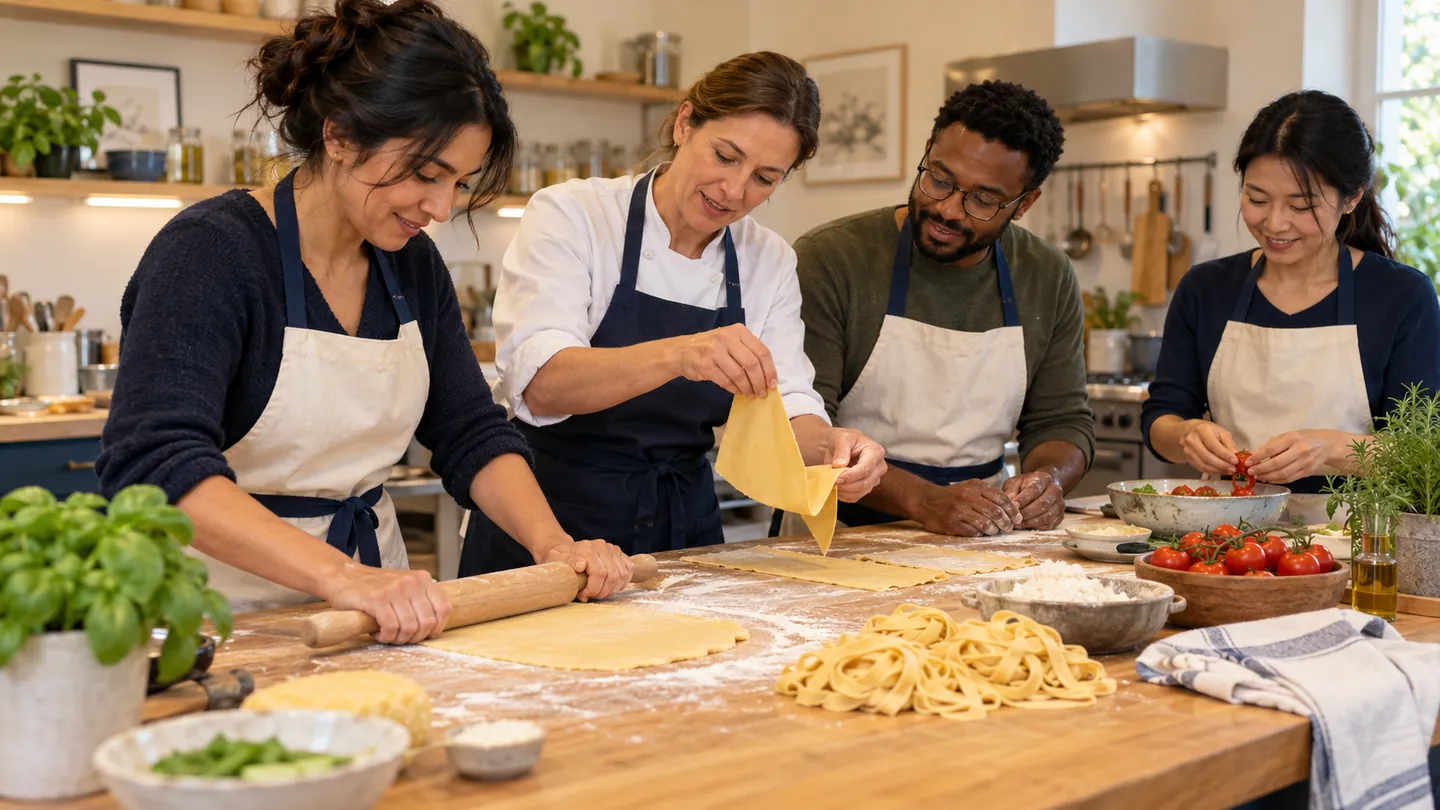
Flour on the counter, a patient explanation and other people trying something new: a small cooking class can feel refreshingly different after a working week. You do not have to impress anyone or own a perfectly equipped kitchen at home. The pleasure may be a simple moment when a few ingredients become a dish you would like to make again for yourself or someone else.
Choose something you actually want to learn
Look for a hands-on class at a level that suits you. Fresh pasta, everyday vegetable dishes or new techniques from a familiar cuisine are possible starting points. Check the duration, group size and format. A demonstration can be interesting, but it offers a different evening from kneading, chopping and cooking alongside other learners.
Ask about dietary requirements, allergies and accessibility before booking, and confirm what the provider can accommodate. Read the cancellation terms and check travel and finishing time. Choosing an evening that works practically makes it easier to look forward to the food, the conversation and the time away from your usual responsibilities.
Enjoy the making as well as the result
Arrive with a little time and ask how the workstation is arranged. Bring the questions you would have when trying the recipe at home: how should the dough feel, when are the vegetables ready, what can be prepared ahead? A brief useful note often helps more later than a beautifully composed photograph.
Allow room for uneven shapes and a conversation across the counter. Your first piece of pasta does not need to resemble a television demonstration. Preparing food together and tasting the result, where that is included in the booked format, can be the rewarding part. This is time for enjoyment rather than another task to complete perfectly.
Budget for the whole evening
List the class price, ingredients, drinks, possible extras and travel both ways, checking what is included. A restaurant credit does not automatically cover a cooking workshop; any eligibility would depend on explicit current offer terms. Choose a price that fits this experience even without an assumed card benefit or future reward.
An existing suitable card may earn points on eligible everyday spending you had already planned, subject to its terms. Check acceptance and eligibility for a class payment too. Account for card costs, repay the statement fully on time and avoid extra purchases for rewards. Points can accompany the plan; they are not a way to fund an unaffordable evening.
Bring one useful idea into everyday life
Ask whether recipes or notes are provided and which ordinary tools will work at home. Choose one dish to repeat instead of immediately planning a complicated menu. A convenient evening and a short shopping list make it easier to try the technique again while the lesson is still familiar.
Use ingredients and equipment that have a place in your normal cooking; special purchases are optional. Perhaps the class becomes an occasional evening cooking with a friend or a dish for your own lunch. What remains is practical and personal: a skill, a clear recipe and the memory of making time for something enjoyable.
Explore local offers
Country of residence
Language changes how you read. Country changes which card is available. Your selection does not confirm eligibility; the issuer makes that decision.
Choose your country
Sources and conditions
- American Express Gold Card
- Platinum: Leistungs- und Angebotsbedingungen
- American Express Platinum Card
Editorial guidance, not personal financial or insurance advice. Offers, residency requirements and benefits vary by country. Check the current terms directly with the provider.